


E-commerce Order Preparation: Methods, Technologies and Automation
Automating e-commerce order preparation helps absorb peaks such as Black Friday, reduce the cost per order and cut the error rate — with solutions that go live in 5 days and scale with your volumes. This guide compares the methods (pick-to-light, put wall, robotic sorting), helps you choose based on your volume, and details the steps of a successful project.
What is e-commerce order preparation?

Unlike traditional retail logistics (restocking stores with full cartons), e-commerce order preparation handles a very large number of small orders — often one to three lines — with next-day or same-day delivery promises that leave no room for error.
Pourquoi automatiser maintenant ?
- Des pics et des volumes volatils : Black Friday, sales, new marketplaces. Capacity must flex quickly — and sites that handle seasonality well sized their equipment twelve months before the peak.
- Scarce, expensive labour : fewer and fewer hands available for receiving, picking and packing, and seasonal temp workers that are increasingly hard to recruit and train.
- Des cut-offs toujours plus tardifs : the express delivery promise compresses the time available between the order and the truck's departure.
- Errors that cost twice over : every preparation error generates a return, a reshipment and a disappointed customer. Automated sorting reaches 99.99% accuracy.
- Returns to absorb : 20 to 40% of volume in e-commerce (fashion leading), an inbound flow that is rarely equipped and rarely measured.
Cost per order is the metric that sums it all up: it adds together picking, consolidation and packing labour, errors, and the void shipped in oversized parcels. Each method below acts on one or more of these components.
Order preparation methods
Pick-to-light and put-to-light : guiding the operator with light
Pick-to-light uses a light indicator to show the location and quantity to pick; put-to-light shows which tote to place the item in. These systems remove manual list-reading and scanning: the operator moves faster and makes fewer mistakes. Ideal for high-turnover picking zones and splitting multi-SKU orders.
Automated put wall : high-speed consolidation (Isiwall)
A put wall consolidates items picked in bulk into totes, one tote per order. ISITEC's automated versions sort without manual sorting intervention :
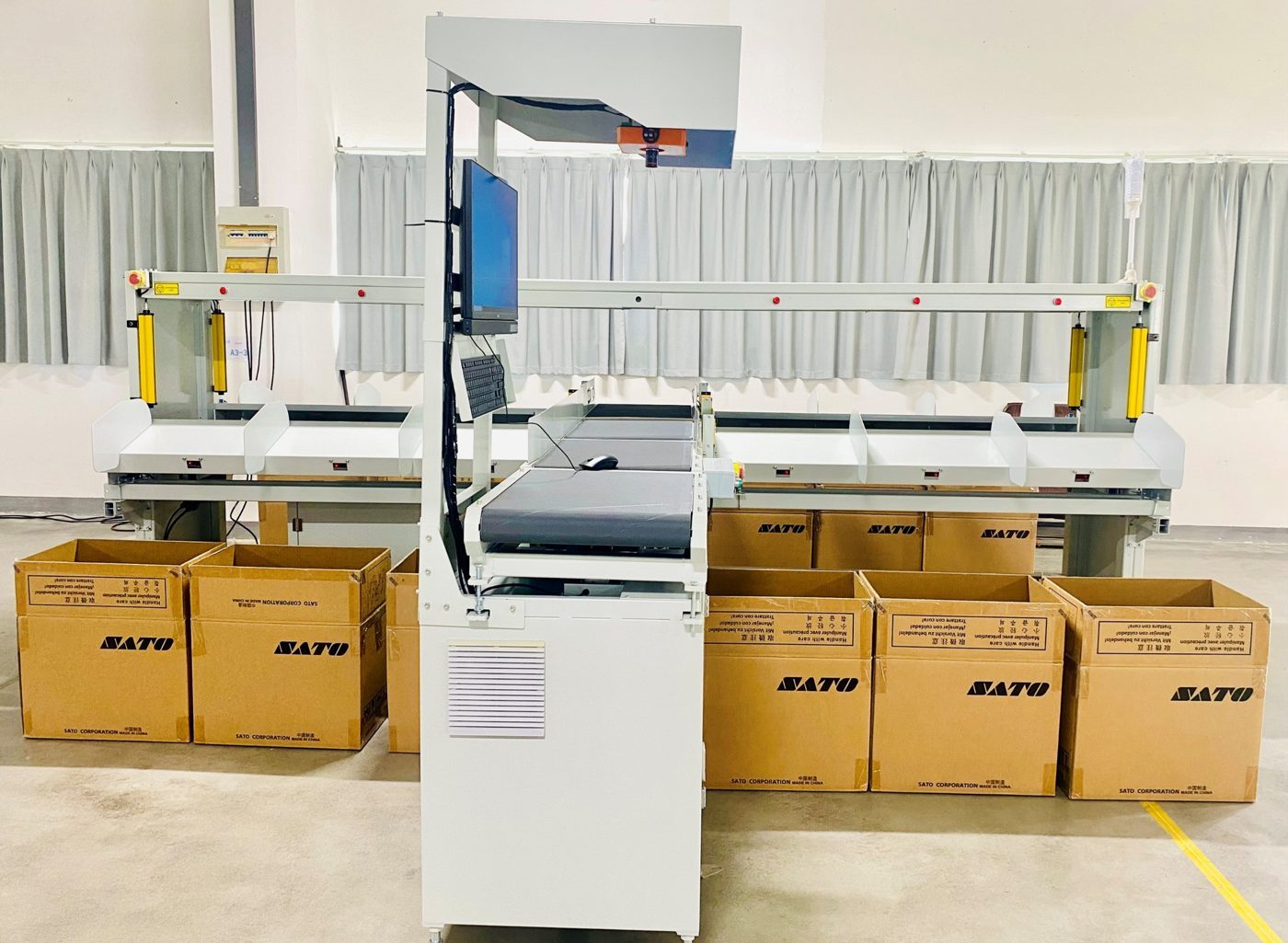
Isiwall 2D
Plug-and-play shuttle sorter, small footprint. Also works for sorting returns.
800–1 500 colis/h13, 26 or 39 chutesoperational in 5 days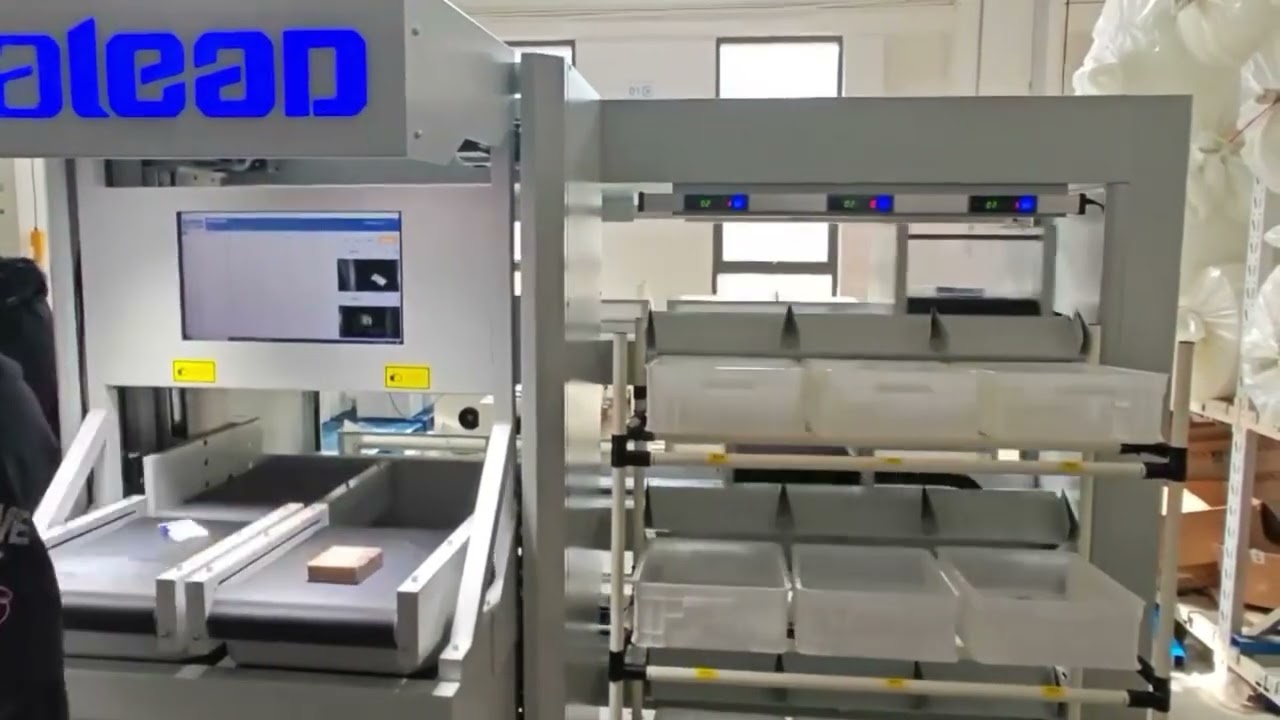
Isiwall 3D
High-capacity automated put wall, scalable and demountable.
800–1 500 colis/h100 to 300 chutesgo-live in 5 to 10 days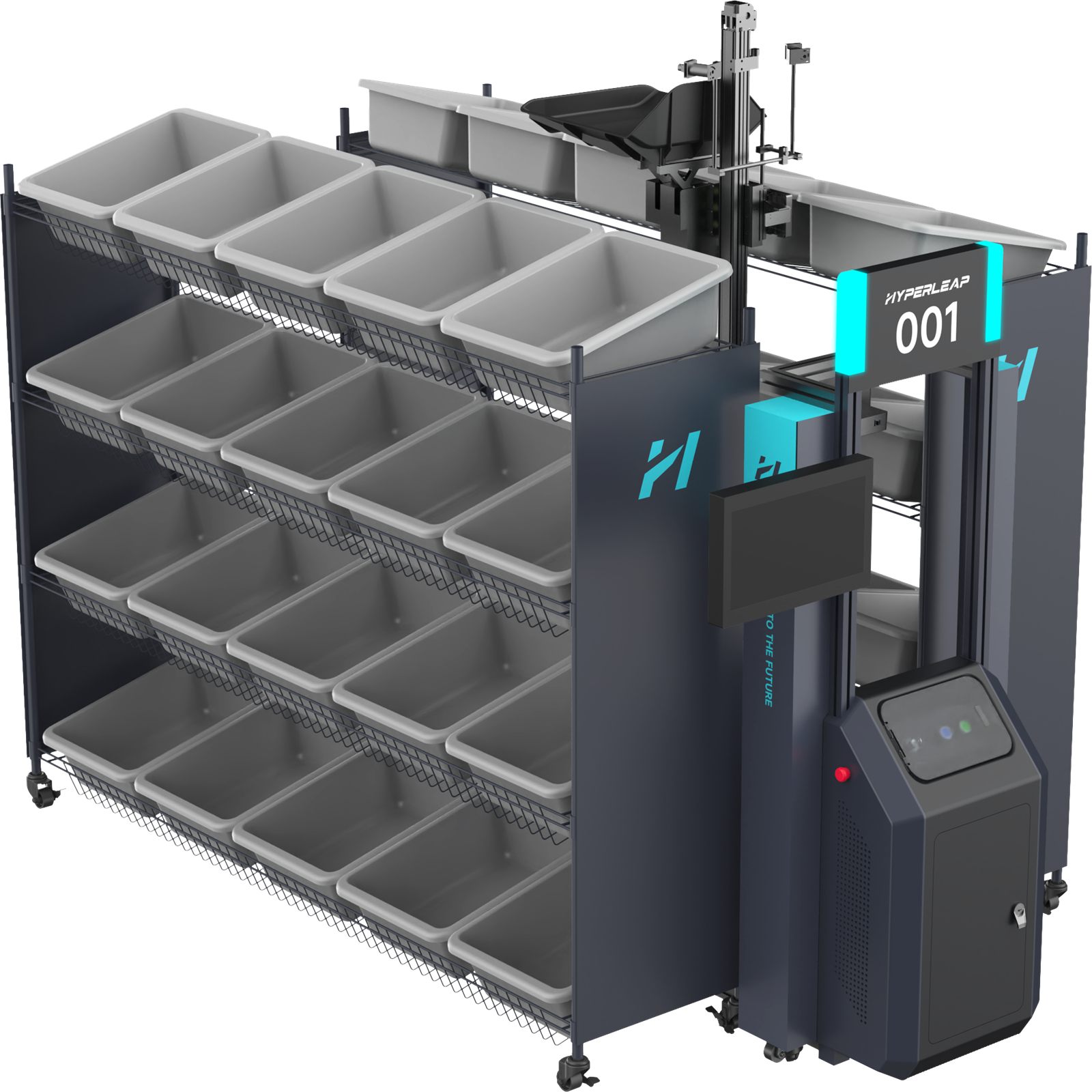
Hyperwall Node 700 & 1500
Compact plug-and-play sorting node, for mid-size sites or extensions.
700–1,500 parcels/h20 to 40 chutes4 days to 4 weeksMobile robotic sorting : capacity that grows robot by robot (Hyperbot)
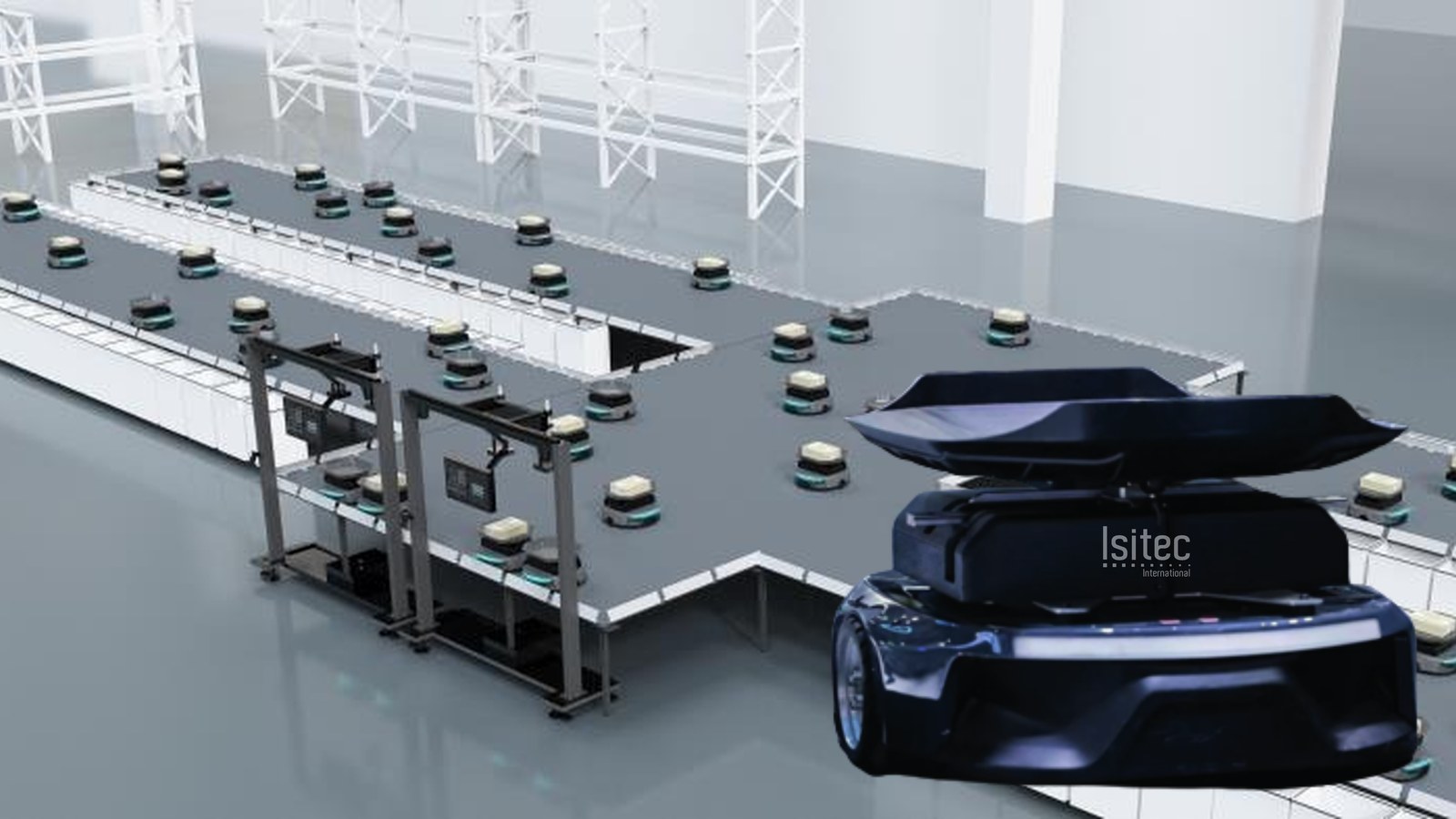
Mobile sorting robots carry each item to its destination chute. The benefit: no single point of failure, capacity that scales by adding robots, and an installation that can be reconfigured or relocated — including as a RaaS model (Robotics-as-a-Service, OPEX).
up to 10,000 parcels/h99.99% accuracy9 to 999 robots10 to 1,000 chutesoperational in 1 to 2 weeks
Motorised preparation cart : Isicart
For multi-order pick and pack, the Isicart motorised cart combines onboard put-to-light with electric assistance: the operator prepares up to 12 orders per run, with no pushing effort (600 kg motorised), driven by Isipick software.
Voice picking and other picking aids
Voice picking guides the operator with audio instructions, hands-free and eyes-free. It remains relevant for warehouses with deep stock and low order density; today it is often combined with, or replaced by, pick-to-light and weight control (pick by balance) on fast-moving zones.
Quelle technologie selon votre volume ? Tableau comparatif
| Method / solution | Throughput | Implementation | Site profile | Strengths |
|---|---|---|---|---|
| Pick-to-light / put-to-light | depending on picking zone | a few weeks | High-turnover zones, multi-line orders | Fewer errors, almost no training needed, immediate productivity |
| Isicart motorised cart | up to 12 orders / run | a few weeks | Pick and pack, existing warehouse without a conveyor | Zero civil works, reduced strain, driven by Isipick |
| Put wall Isiwall 2D | 800–1 500 colis/h | 5 days | 1 000–10 000 commandes/jour, pics saisonniers | Plug-and-play, small footprint, reversible, also sorts returns |
| Put wall Isiwall 3D / Hyperwall | 700–1,500 parcels/h | 4 days to 4 weeks | Mid-size to large sites, up to 300 chutes | High consolidation capacity, scalable, demountable |
| Mobile robotic sorting (Hyperbot) | up to 10,000 parcels/h | 1 to 2 weeks | High volumes, uncertain growth, 3PL | Robot-by-robot capacity, no single point of failure, RaaS |
| Fixed sorters (cross belt, narrow belt…) | up to 12,000 parcels/h | custom project | Very high stable volumes, carrier sorting | Maximum throughput, barcode-free sorting possible (OCR/Vision) |
The criteria that really matter
- The order profile (lines per order, item mix) matters more than raw volume.
- Seasonality : size for the peak, or flex with scalable equipment?
- Reversibility : demountable, reusable equipment protects against uncertainty — decisive for 3PL.
- The full TCO : maintenance, energy, obsolescence, relocation — the hidden costs that quotes never make comparable.
- The software : who controls it all, and who owns your flow data?
Automated packing — including plastic-free
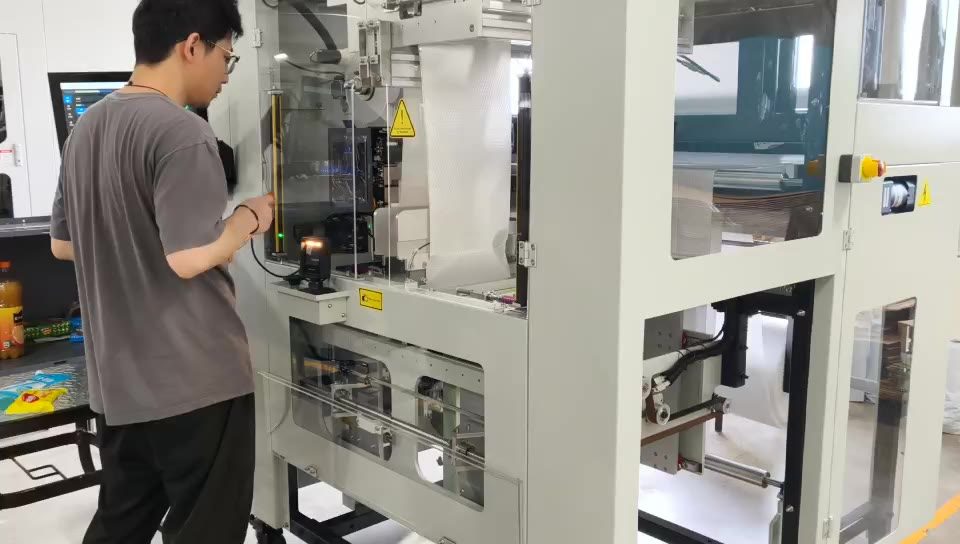
Isibagger 600 / 600 D
Automated bagging — paper, plastic or bubble, fixed or on-demand format.
600 parcels/hoperational in 2 to 5 daysIT interface included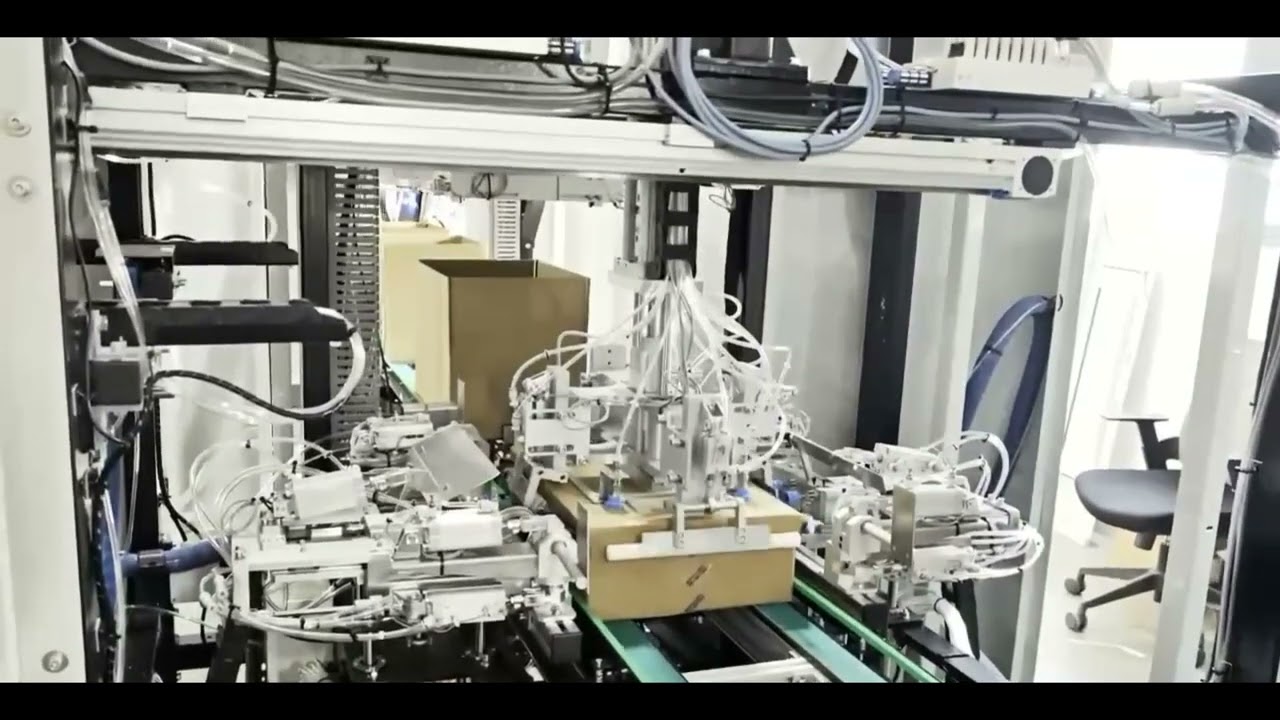
Isi.Ecopack
Automated cartoning sized to the content's height: less material, less void shipped, less dunnage.
600 parcels/hgo-live in 2 to 3 weeksclosing + label in 6 sFor sectors where packaging quality is non-negotiable (beauty, pharmacy), the lever isn't cutting back on premium material — it's throughput : compressing the human packing time, not the cardboard.
Tri des retours : le flux que personne ne mesure
The peculiarity of e-commerce returns: they arrive offset. The preparation wave hits during the peak (Black Friday, sales); the returns wave arrives right after. Automation sized for only one of the two flows sits half-idle half the time.
This is why ISITEC's Isiwall put walls and robotic sorters are reversible : order preparation during the outbound peak, returns sorting (by SKU, by condition, by restocking destination) during the inbound wave. One investment, two flows covered.
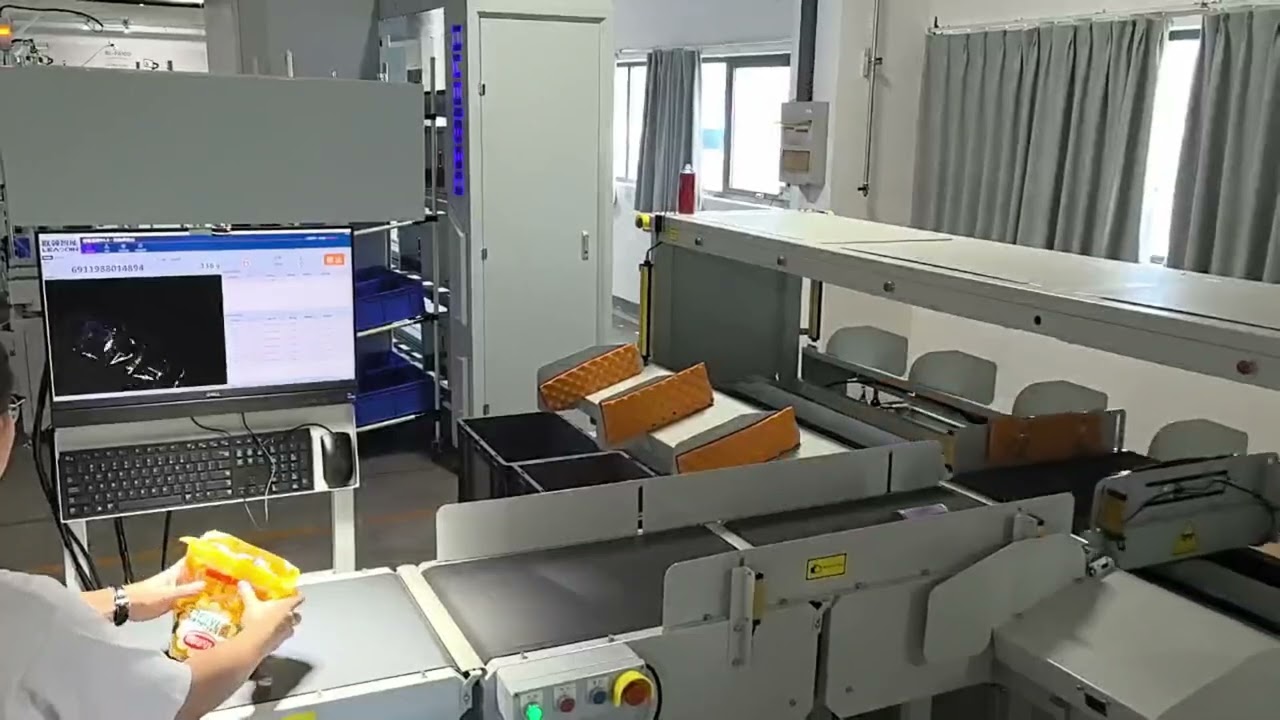
Automation solutions for 3PLs
- Plug-and-play : an Isiwall 2D installed in 5 days can be redeployed on another site or reconfigured for a new client.
- Modular capacity : robotic sorting grows robot by robot — sizing is based on the signed contract, not a growth assumption.
- RaaS (Robotics-as-a-Service) : the equipment as OPEX, aligned with the client contract's duration — no stranded asset at contract end.
- Fast ROI : the payback horizon must fit within the contract's duration, not exceed it.
The software that orchestrates everything : WES, WCS and FMS
A classic trap: every manufacturer forces its own proprietary software on you. With three suppliers, you end up with three systems that don't talk to each other, fragmented flow data, and no one left who sees the whole picture. ISITEC's software is brand-agnostic and multi-vendor, developed in-house since 2002 :
Isipick — WES
Orchestrates operators and preparation processes: Isiwall 2D, Isicart, pick-to-light, put-to-wall. Features, interface and IT services included in scope.
Isiflow — WCS
Controls fixed automation: conveyors, sorters, DWS (dimensioning, weighing, scanning). Brand-agnostic WCS, interfaces with your WMS/ERP included.
Isifleet — FMS
Manages multi-brand AMR/AGV fleets (VDA 5050) for intralogistics transfer: AI orchestration, collision-free traffic, ERP/WMS/MES connectivity.
The steps of an automation project — and its ROI
1. Feasibility study on your data
Volumes, item mix, lines per order, seasonality: the study starts from your real flows, not assumptions. The 3D simulation tests the solution on your own parcels before you invest.
2. The Go/NoGo decision — including when it's no
ISITEC is an integrator: our opinion commits the very people who will have to implement it. If automation isn't justified, we say so — that's the difference between advice and a billed opinion. And sometimes, the real performance opportunity isn't more automation, but the existing setup used better.
3. Compare on a real TCO
Quotes with fuzzy scopes, hidden costs (maintenance, energy, obsolescence, relocation): comparing automation projects is a nightmare. Our TCO models make comparable the offers that otherwise aren't.
4. Start small, prove it, scale up
Micro-automation — a put wall in 5 days, a packing module in 2 days — lets you prove the gain on a limited scope before scaling up. Testable, scalable, reversible: the risk stays under control at every step.
5. Operate and maintain
150 maintenance contracts, local teams in 6 countries (France, Benelux, Central Europe, Romania, Turkey, Tunisia), and proven references up to the scale of national postal operators.
FAQ — E-commerce order preparation
What is e-commerce order preparation?
Which preparation method should I choose?
How quickly can it be automated?
Can returns processing be automated?
Faut-il un gros volume pour rentabiliser l'automatisation ?
What is the difference between WMS, WES and WCS?
Can packing be automated without plastic?
What solutions exist for a 3PL?
Test the solution on your own flows
Share your volumes, item mix and constraints: we carry out the feasibility study and the 3D simulation on your real parcels — and we tell you honestly Go or NoGo. You can also see the solutions running at our showroom near Lyon.
Request a feasibility study