


Parcel Sorter: Technologies, Throughput and Selection Criteria
A parcel sorter identifies, weighs and routes each parcel to the right outlet — from 2,000 to 36,000 parcels/hour depending on the technology. This guide compares cross belt, narrow belt, wheel sorters and sorting robots by your throughput, formats and footprint, and explains how to modernise an existing sorting centre without shutting it down.
What is a parcel sorter?
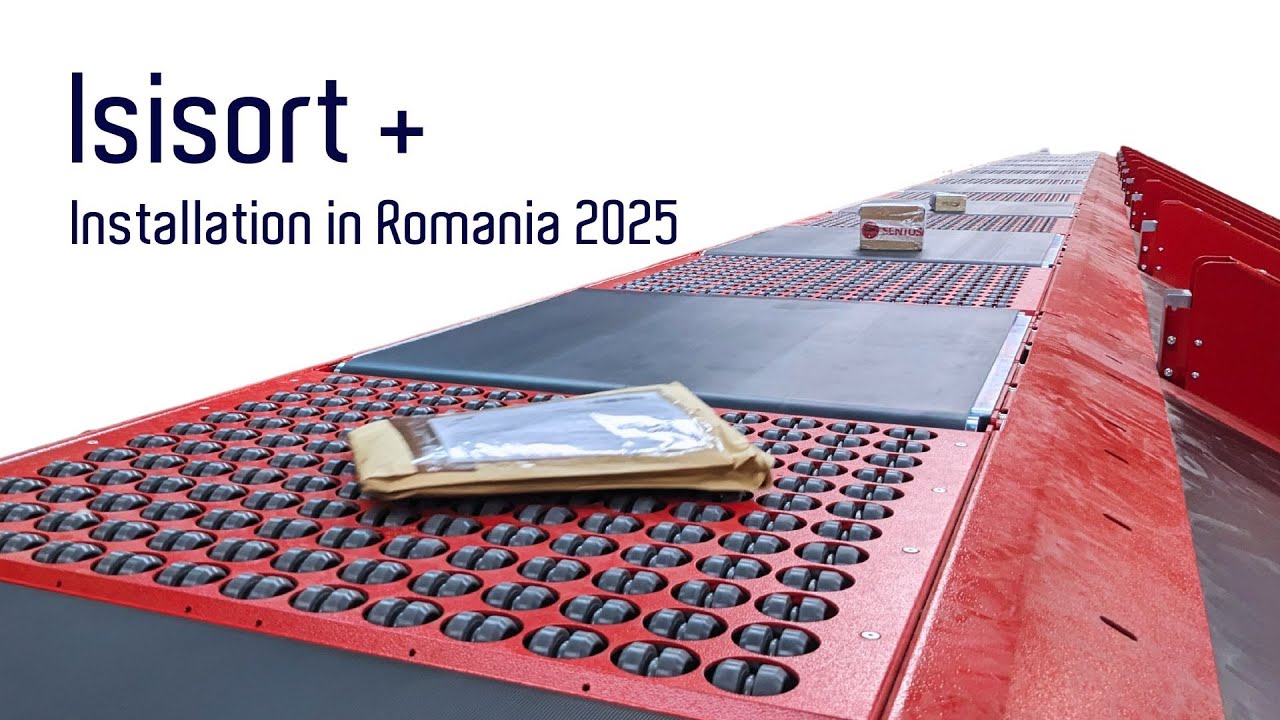
Parcel volumes driven by e-commerce keep growing every year, while mail keeps declining: postal and express operators (CEP — Courier, Express, Parcel) must convert their mail sorting centres into parcel sorting centres, absorb increasingly pronounced seasonal peaks, and meet next-day deadlines on increasingly dense networks.
- Peak throughput sizes everything : a centre that holds up on average can collapse on Black Friday.
- The parcel profile keeps changing : soft polybags, small parcels, odd formats — the sorter must handle them all.
- Footprint is constrained : many sorting centres are in urban areas, with no room to expand.
- Staff are scarce : every manual encoding or sorting position removed is a lasting gain.
Parcel sorting technologies
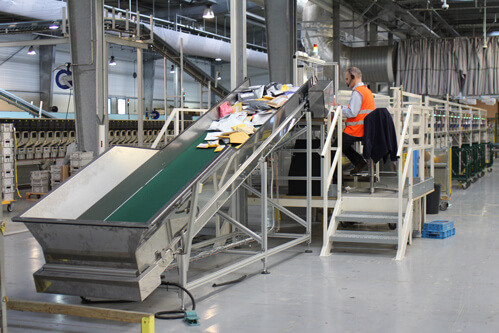
Isisort® — pneumatic sorter
Easy-to-integrate pneumatic sorting solution, ideal for letters and small parcels.
small formatssimple integrationIsisort+® — modular wheel sorter
Steerable wheel sorter: each module sorts in 1 to 4 directions (30° to 90°), unlimited number of modules, extensible after installation. Outlets to postal bags, gravity chutes, trolleys or conveyors.
up to 6,000 parcels/hup to 35 kgmodular & cost-effective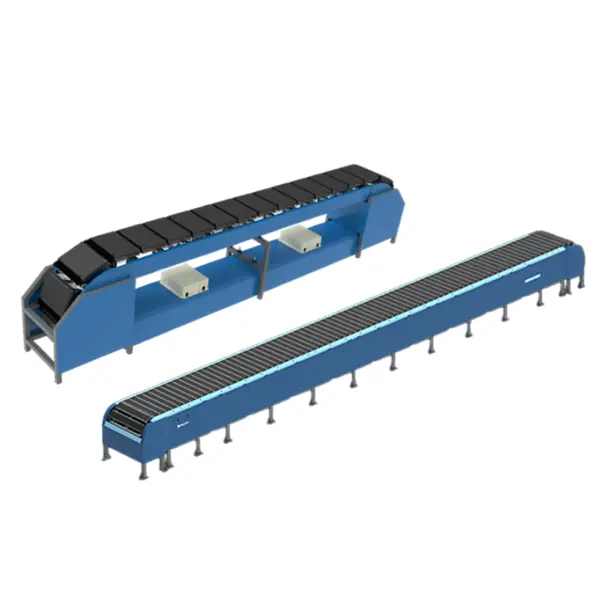
Narrow belt
Narrow belt sorter, compact and fast — the right throughput/footprint ratio for mid-size hubs.
up to 9,000 parcels/h2 m/sup to 60 kg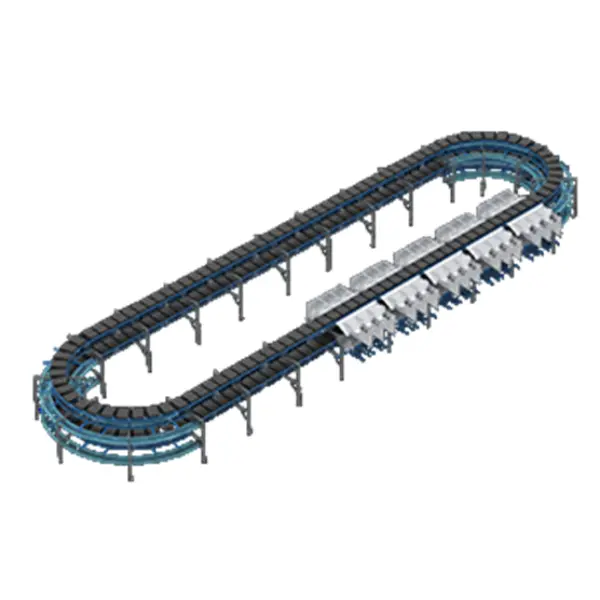
Cross belt
Each parcel travels on its own cross belt: precise sorting and gentle handling, including polybags and fragile items — the reference for postal and e-commerce hubs.
up to 36,000 parcels/hhigh outlet density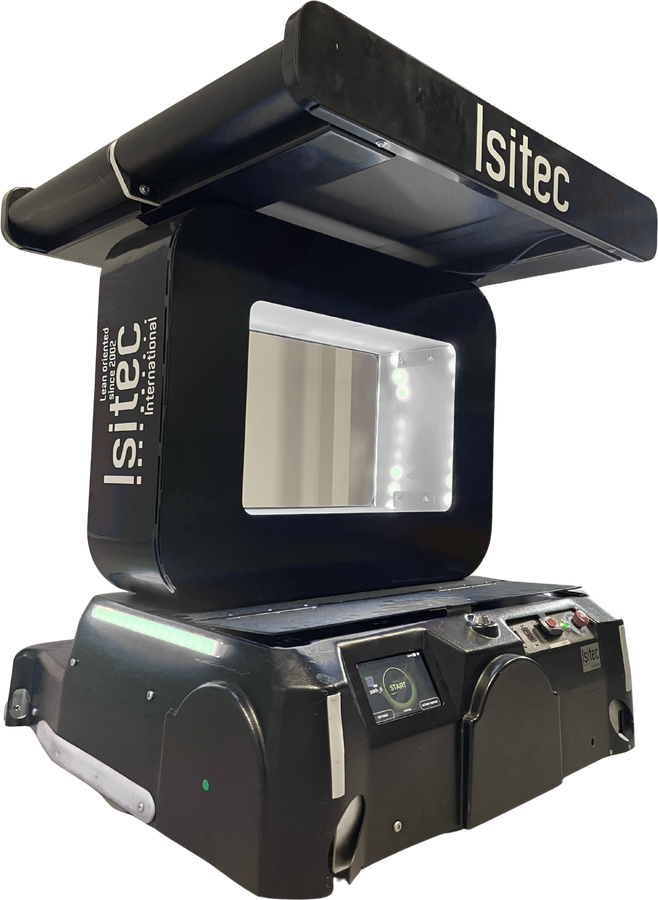
Mobile robotic sorting (AGV sorter)
A fleet of small robots carries each parcel to its chute. Capacity adjustable robot by robot, no single point of failure, reconfigurable, RaaS model possible.
up to 15,000 items/hdeployment 1–2 weeks10 to 1,000 outlets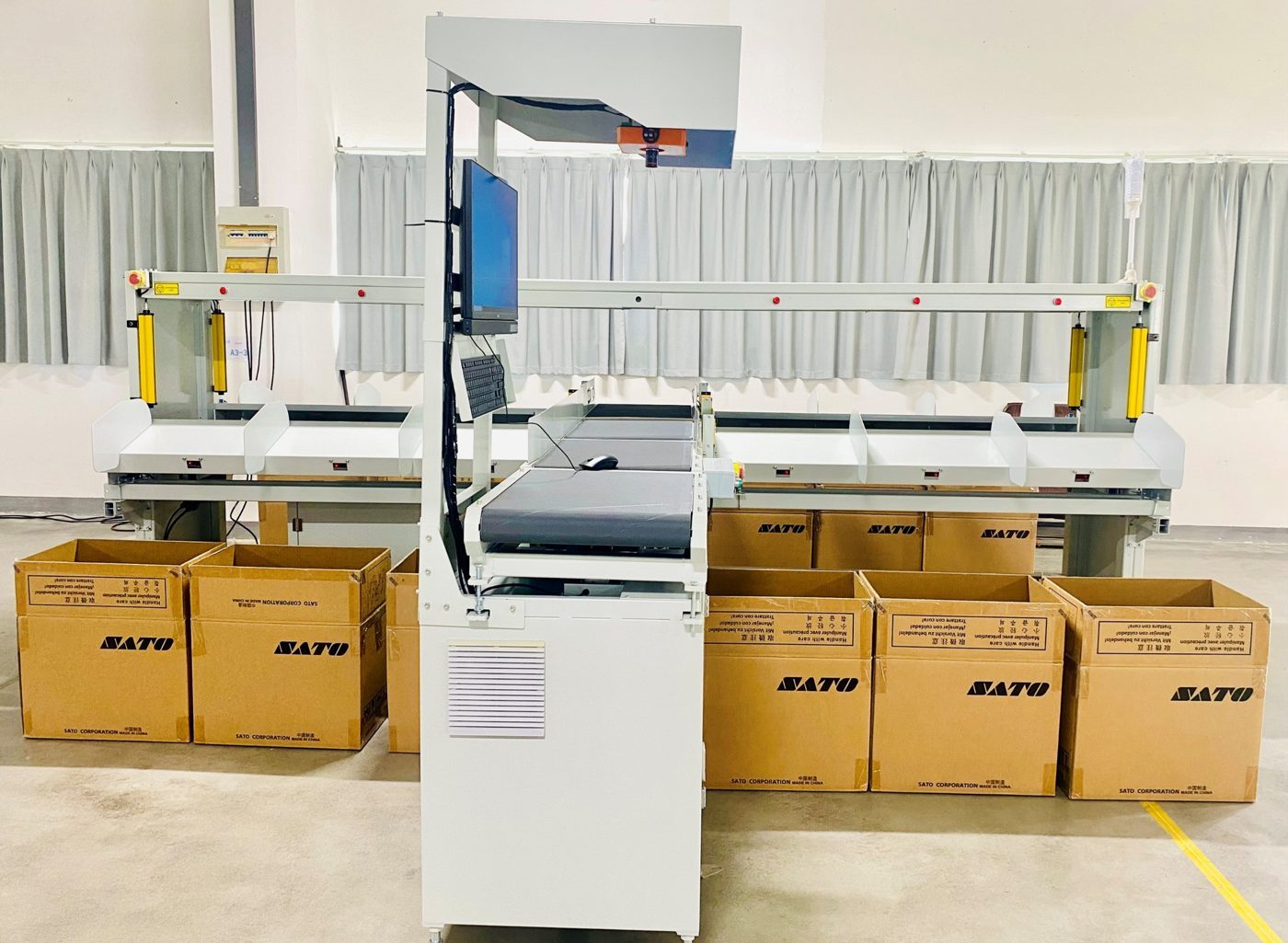
Isiwall 2D
Plug-and-play shuttle put wall, fine sorting into totes at the output of the main sorter or as secondary sorting — also used for e-commerce returns.
800–1 500 colis/h13 to 39 chutes
Isiwall 3D
High-capacity automated put wall for multi-category, multi-flow scenarios, scalable and demountable.
800–1 500 colis/h100 to 300 chutesFor mail and flat items, see the dedicated sorters Isi12000 (flat mail) and Isi40000 (mixed mail).
Which parcel sorter for your throughput, formats and footprint?
| Technology | Max throughput | Weight / formats | Footprint | Scalability | Typical profile |
|---|---|---|---|---|---|
| Isisort® pneumatique | depending on configuration. | lettres, petits colis | very compact | good | Mail & small items |
| Isisort+® wheel sorter | 6,000 parcels/h | up to 35 kg — cartons, polybags, books | compact, linear | excellent (modules can be added) | Regional hub, parcel delivery, returns |
| Narrow belt | 9,000 parcels/h | up to 60 kg | compact | medium | Mid-size hub with limited space |
| Cross belt | 36,000 parcels/h | fragile items, polybags, multi-format | dedicated loop | by extending the loop | National postal / e-commerce hub |
| Mobile robotic sorting | 15,000 items/h | 5 kg (30 kg version) | modular platform, mezzanine possible | excellent (robot by robot) | Constrained sites, volatile volumes, 3PL |
| Isiwall put wall | 1,500 parcels/h | e-commerce parcels | very compact | good | Secondary sorting, returns |
Technologies combine with each other: a cross belt in primary sorting can for instance feed Isiwall units in fine secondary sorting, or an Isisort+ connected to Pick to Light for detailed splitting.
The peripherals that make a sorting centre's real throughput
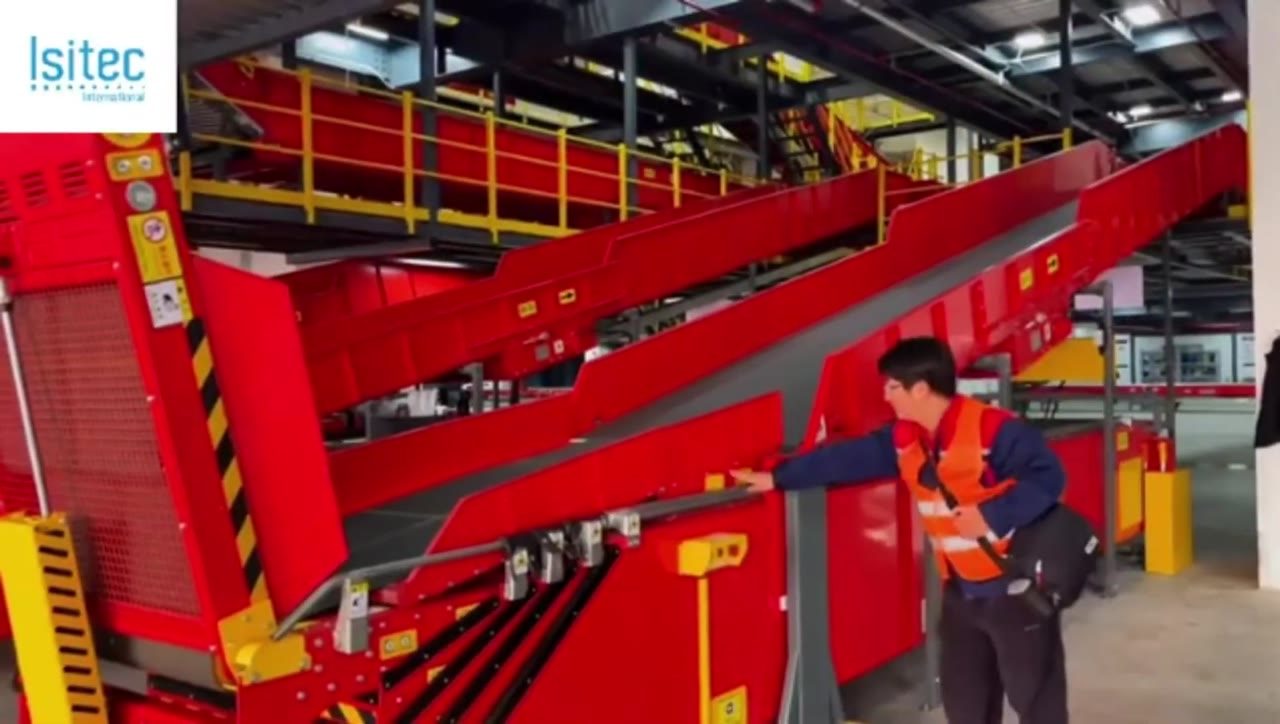
Telescopic conveyors
Direct unloading and loading into the truck or container. World No. 1, over 1,000 units in stock, short lead times.
7 to 28 m600 to 1,000 mm wideup to 60 kg/m²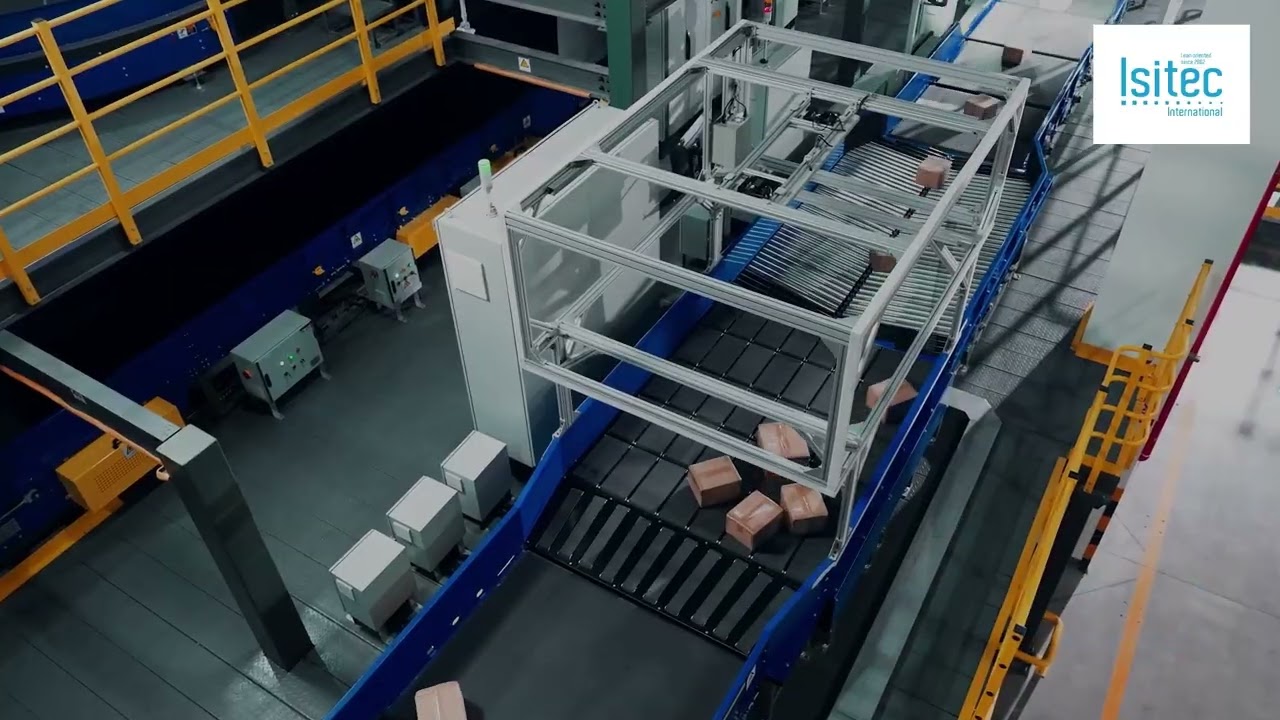
Singulator 2D / 3D
Turns a bulk flow into a line of spaced, oriented parcels, ready for reading and sorting — removes the manual lining-up position.
automatic feeding of the sorter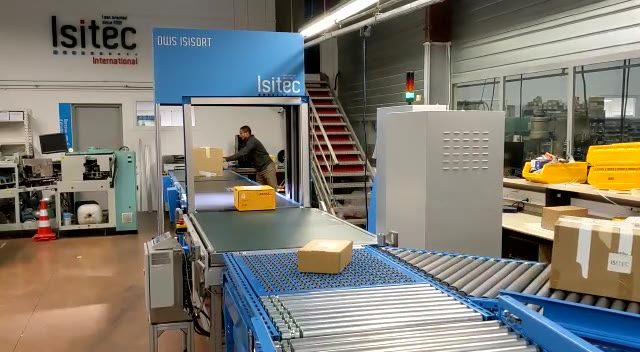
DWS — dimensioning, weighing, scanning
Measures, weighs and scans each parcel in a single pass, static or dynamic on a conveyor. Certifiable weighing, IT interface included.
up to 3,000 parcels/h800 mm · 50 kg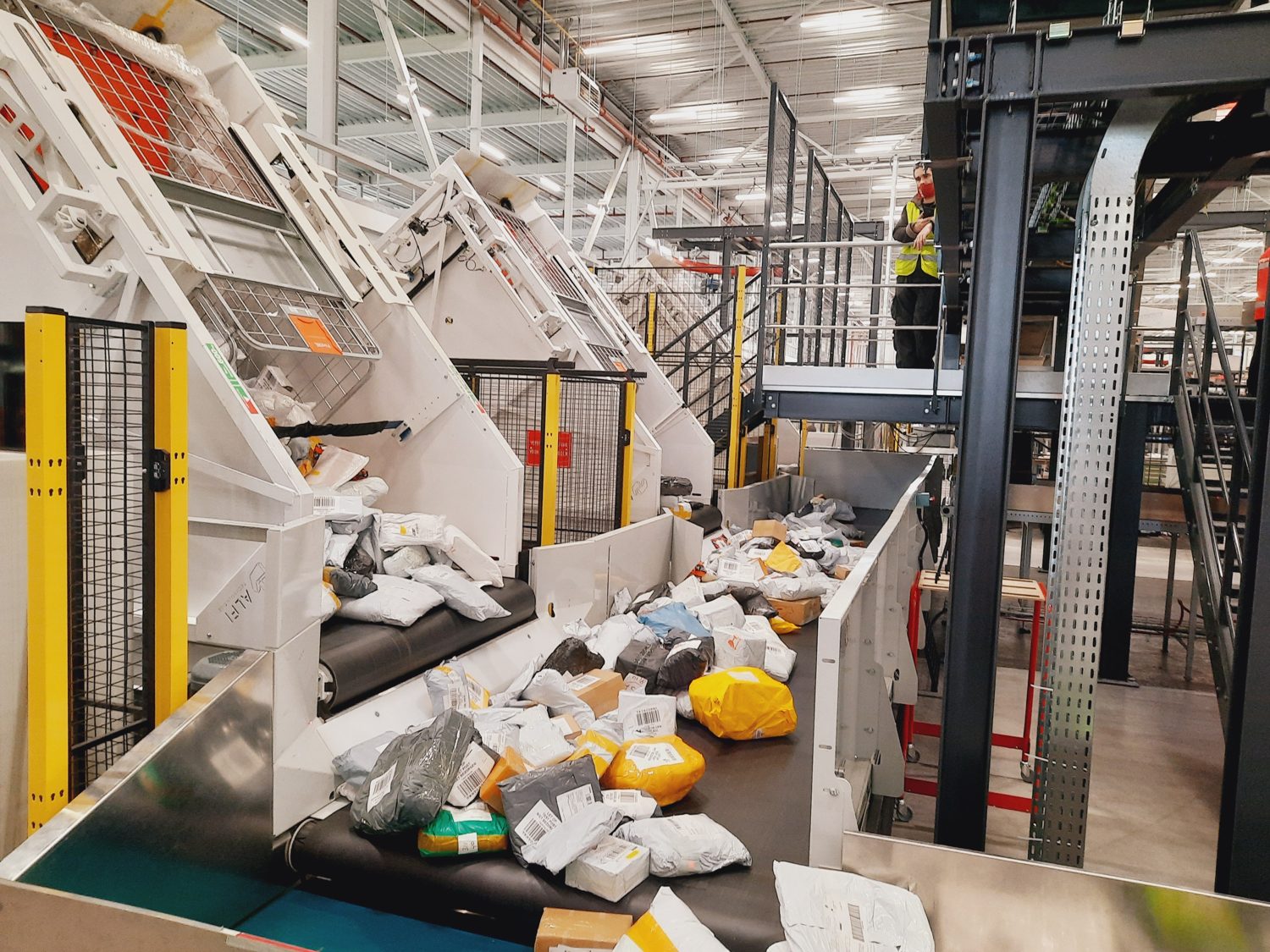
Tippers, palletising, loading
Upstream tote tippers, palletising sorter and truck loading downstream: the complete chain, from the arrival dock to the departure dock.
Sorting without barcodes: OCR and machine vision
This innovation building block integrates into ISITEC sorters (up to 12,000 parcels/h in retail sorting) and handles the real-world cases of a sorting centre: damaged labels, returned parcels, handwriting, oversized objects. Combined with the DWS, it feeds the WCS all the parcel's data in a single pass.
Modernising an existing sorting centre — without shutting it down
- Diagnosis on real data : throughput measured station by station, not theoretical throughput — bottlenecks are rarely where you expect them.
- Phased deployment : every step is tested and reversible; operations continue during the works.
- Software independence : a brand-agnostic WCS controls machines from several manufacturers — you keep control of your architecture and your data.
- Comparison on full TCO : maintenance, energy, obsolescence and migration costs included — not just the machine price.
Isiflow: the brand-agnostic WCS that controls sorting
This is the anti-lock-in guarantee: the day a machine changes or a supplier changes, your sorting logic, your sorting plans and your data stay with you. For fleets of sorting robots, the FMS Isifleet complements Isiflow; for operator-driven sorting, the WES Isipick.
Proven at the scale of national postal operators
- Since 2002: supply chain IT specialist, integrator and software publisher — 80 people, 12 key areas of expertise.
- 150 maintenance contracts, local teams in 6 countries, 70% of revenue from exports.
- End-to-end custom design: from the unloading dock to the departure dock, software included.
FAQ — Parcel sorter
What is a parcel sorter?
How do I choose a parcel sorter?
What throughput can a parcel sorter reach?
Can parcels be sorted without barcodes?
What is a DWS system?
How do I modernise an existing sorting centre?
Which sorter for a site with limited footprint?
What are ISITEC's references in postal sorting?
Let's size your sorting on your real flows
Peak volumes, parcel profiles, available footprint: we simulate the scenarios, compare technologies on full TCO and give you a reasoned Go/NoGo opinion.
Request a sorting study